
Most topical collagen molecules are simply too large to penetrate the dermis, meaning your expensive collagen boosting face cream might be doing little more than providing a temporary, superficial film. It's frustrating to invest in premium skincare only to see the same loss of elasticity and firmness in the mirror each morning. You've likely felt the temporary plumping of a standard moisturizer, yet noticed that the underlying structural thinning remains unaddressed.
This article explores the biological reality of skin aging and reveals why conventional topical collagen often fails to deliver lasting results. You'll discover how bioavailable organic silicon, specifically Monomethylsilanetriol (MMST), provides the essential structural blueprint your body needs for genuine dermal restoration. We'll examine the transition from surface hydration to cellular support, helping you build a scientifically sound routine that restores natural radiance and bounce from the inside out. By understanding the molecular requirements of your skin, you can move beyond quick fixes toward a future of long-term structural integrity and health.
Key Takeaways
- Understand the molecular limitations of conventional topicals and why standard collagen molecules are too large to bypass the epidermal barrier.
- Discover the role of MMST as a structural blueprint that supports the enzymes responsible for building resilient collagen and elastin fibers.
- Learn to evaluate a collagen boosting face cream based on molecular bioavailability rather than temporary plumping effects.
- Explore the synergy of an "Inside-Out" approach that pairs targeted topical application with dietary silicon to maximize dermal density.
- Gain insight into the research-led heritage of LLR-G5 and its commitment to formulating high-purity, science-backed skincare solutions.
The Collagen Paradox: Why Most Face Creams Under-Deliver
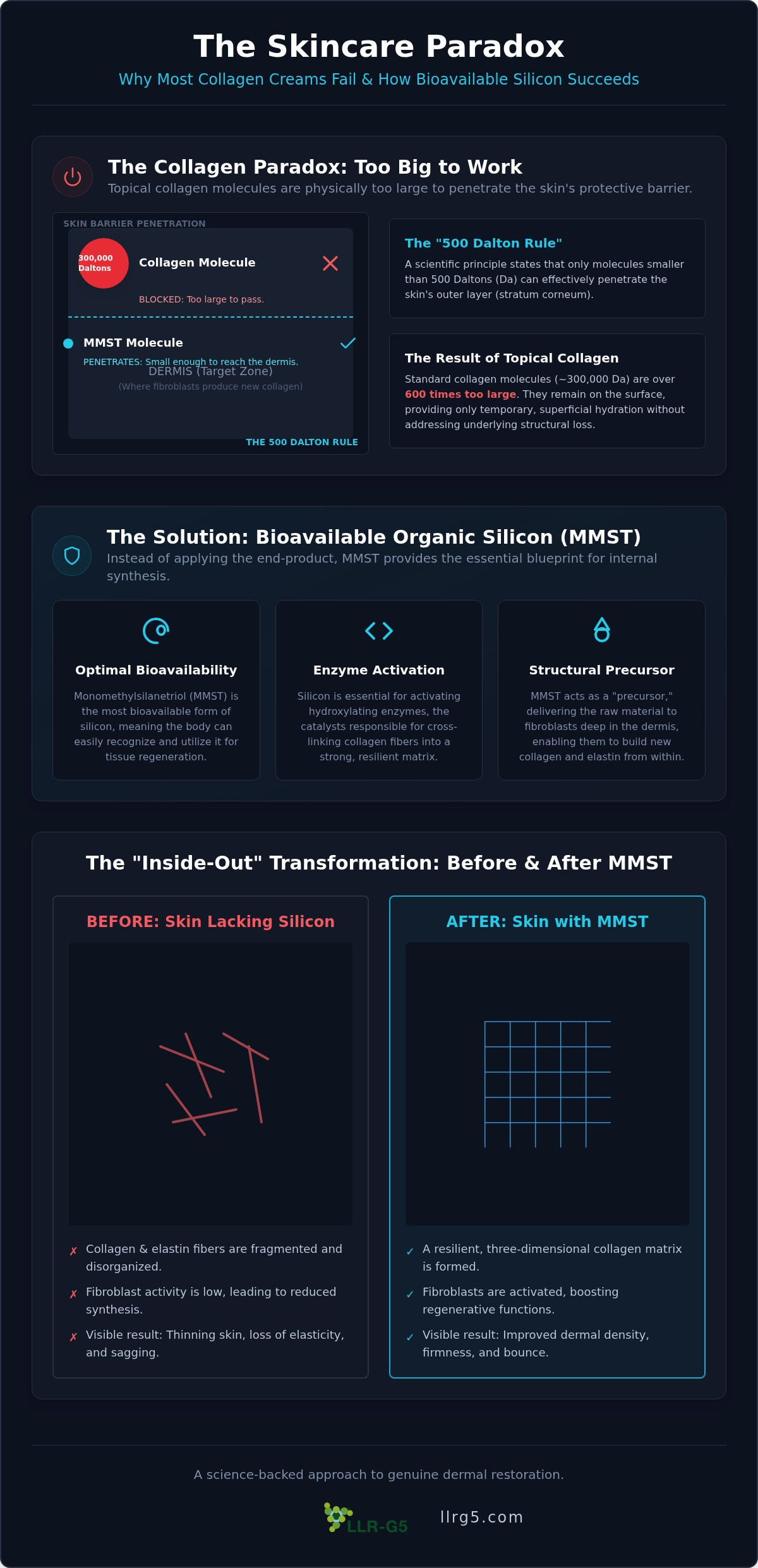
The skincare industry relies heavily on the name recognition of collagen, yet the biological reality of the skin barrier presents a significant hurdle. While understanding What is Collagen? reveals its importance as a structural protein, its physical size is its own limitation. A typical collagen molecule has a molecular weight of roughly 300 kilodaltons (kDa). For context, the skin's natural defense system is designed to exclude large proteins to prevent irritation and infection. This creates a paradox. A standard collagen boosting face cream may contain high concentrations of the protein, but those molecules are physically incapable of passing the basement membrane. They rest on the surface, providing temporary hydration while the underlying dermal structure continues to lose density.
True restoration requires a shift from "end-product application" to "precursor delivery." Instead of attempting to force a massive protein through a microscopic barrier, we must provide the skin with the specific nutrients it needs to manufacture its own collagen. Without this internal synthesis, surface-level treatments offer nothing more than a fleeting cosmetic effect. They mask the signs of aging without addressing the biological cause.
The Science of Dermal Penetration
Effective ingredient delivery is governed by the "500 Dalton rule." This scientific principle states that only molecules smaller than 500 Daltons can reliably penetrate the stratum corneum, the skin's outermost layer. Since collagen is nearly 600 times larger than this threshold, it remains trapped on the surface. It cannot reach the fibroblasts, which are the specialized cells located deep in the dermis responsible for creating new tissue. While your skin might feel smoother immediately after application, this is merely superficial plumping. It lacks the cellular communication required for genuine regeneration or a lasting increase in skin firmness.
Defining Bioavailability in Skincare
The efficacy of any treatment is determined by its bioavailability, or how easily the body can recognize and utilize the substance. The chemical form of an ingredient is the primary factor here. Traditional mineral silica, for example, is often poorly absorbed and biologically inert when applied topically. It lacks the molecular structure to integrate with human cells. Organic silicon, specifically Monomethylsilanetriol (MMST), represents a significant advancement in molecular biology. MMST is the most bioavailable form of silicon for human tissue. By delivering this specific precursor, a sophisticated collagen boosting face cream can support the natural enzymatic processes that build the skin's internal architecture from within, leading to a visible restoration of bounce and resilience.
The Silicon-Collagen Synthesis: How MMST Reinvents Skin Architecture
Silicon is the silent architect of the skin's structural framework. While many products focus solely on adding proteins, the biological reality is that collagen synthesis cannot occur without specific mineral co-factors. Silicon is indispensable for the activation of hydroxylating enzymes, which are responsible for the cross-linking of collagen fibers. This process ensures that the fibers aren't just present, but are organized into a resilient, three-dimensional matrix. According to a scientific review of collagen supplements, the effectiveness of dermal support often depends on the bioavailability of these essential precursors rather than the presence of the protein itself.
MMST acts as a biological bridge, facilitating the connection between collagen and elastin. Without sufficient silicon, these fibers become fragmented and disorganized. This structural breakdown manifests as the visible thinning and sagging associated with advancing age. By providing a stable, organic form of silicon, a high-performance collagen boosting face cream helps maintain the integrity of the extracellular matrix. It's a shift in focus from temporary hydration to reinforcing the very foundation of the dermis. Clinical insights suggest that maintaining silicon levels is vital for preventing the collapse of the skin's architecture.
MMST and Fibroblast Activation
Fibroblasts are the cellular engines of the skin, yet their activity naturally declines as silicon levels dissipate over time. Monomethylsilanetriol (MMST) serves as a potent signaling molecule that encourages these cells to resume their regenerative functions. Increased silicon levels are directly correlated with greater dermal thickness and improved resilience. This isn't a superficial change; it's a fundamental shift in how the skin maintains its own density. When choosing a collagen boosting face cream, the focus should be on this cellular communication that drives natural protein production.
Structural Integrity Beyond the Surface
The influence of organic silicon extends to the stability of glycosaminoglycans (GAGs), such as hyaluronic acid. Silicon helps these molecules retain their structure, which in turn maximizes the skin's ability to hold moisture at a deep, cellular level. This cumulative support creates a more resilient barrier against environmental stressors and oxidative damage. Over time, consistent use of bioavailable silicon leads to a noticeable restoration of the skin's natural bounce and glow. For those seeking long-term structural health, exploring the innovative MMST formulations developed by LLR-G5 provides a research-led path toward genuine dermal restoration.
Evaluating the 2026 Skincare Landscape: Peptides, PDRN, and MMST
As we look toward the 2026 skincare landscape, the focus is shifting from aggressive resurfacing toward "Essential Molecular Skincare." This movement prioritizes bio-identical molecules that support the skin's innate biological functions rather than overwhelming them. While many consumers search for a collagen boosting face cream based on marketing buzz, the discerning individual evaluates the molecular stability and synergy of the ingredients. MMST stands out in this evolving market due to its exceptional stability. Unlike L-ascorbic acid, which is notoriously prone to oxidation, or retinoids that can degrade under light exposure, MMST remains chemically consistent. This stability makes it an ideal partner for other high-performance ingredients like Hyaluronic Acid and Vitamin C, creating a comprehensive environment for dermal repair.
MMST vs. Conventional Anti-Ageing Actives
Peptides are widely recognized for their ability to act as cellular messengers. According to Harvard Health, peptides in skincare can signal the body to produce more collagen. However, a signal without the necessary raw materials is often incomplete. While peptides provide the instruction, MMST provides the mineral co-factors required for the enzymatic execution of those instructions. Similarly, while retinoids are effective for accelerating cellular turnover, they often lead to barrier disruption and sensitivity. MMST supports the structural proteins that reinforce the skin barrier, offering a non-irritating alternative or a stabilizing companion to traditional anti-aging actives.
The Rise of Mineral Bioavailability
The rise of mineral bioavailability marks a departure from synthetic fillers and a move toward biological precursors. Modern consumers increasingly value transparency and long-term safety, favoring molecules that the body can readily identify and utilize. MMST is the "silent hero" of this transition. It isn't a foreign substance; it's a refined delivery system for a mineral the body already requires for structural integrity. By choosing a collagen boosting face cream formulated with high-purity MMST, users invest in a non-toxic, highly compatible solution that respects the skin's biological heritage while delivering future-facing results. This approach ensures that the pursuit of aesthetics never compromises the foundational health of the tissue.
Maximising Dermal Density: A Guide to Effective Application
Effective skincare isn't just about what you apply; it's about how you support the body's natural regenerative cycles. While a high-quality collagen boosting face cream provides the necessary external precursors, true dermal density is achieved through a multi-dimensional strategy. We recommend an "Inside-Out" approach that saturates the tissue with bioavailable silicon from both directions. This dual-delivery method ensures that fibroblasts have a constant supply of the mineral co-factors required for collagen synthesis. By addressing the skin's structural needs systemically and topically, you create an environment where cellular restoration can thrive.
Timing is equally critical for optimal results. Dermal repair and cellular turnover peak during the night. Applying MMST-based products shortly before sleep aligns with the skin's natural circadian rhythm, maximizing the efficacy of the structural blueprint while the body is already in its restorative phase. To enhance absorption, ensure the skin is warm and slightly damp; this increases permeability and allows the small MMST molecules to bypass the stratum corneum more efficiently.
The Synergy of Topical and Oral Silicon
Scientific research conducted by the LLR-G5 laboratory since 1999 highlights the significance of molecular bioavailability in tissue health. When you pair G5® The Cream with G5® The Dietary Supplement, you create a synergistic effect that addresses structural integrity at every level. The dietary supplement ensures systemic availability of organic silicon, while the cream provides targeted support to the most visible areas of concern. This holistic method is designed to maintain the skin's extracellular matrix more effectively than topical application alone. To begin your journey toward lasting dermal restoration, you can explore the full range of G5® MMST solutions.
A Step-by-Step Ritual for Firmness
Begin your routine with a gentle cleanser that removes impurities without stripping the skin's essential lipids. Once the skin is prepared, apply your collagen boosting face cream using upward, circular motions. Focus specifically on the jawline, neck, and periorbital area, where the loss of elasticity is often most pronounced. Incorporating a brief massage during application doesn't just feel luxurious; it encourages localized circulation, which helps deliver nutrients to the fibroblasts.
Patience is a scientific necessity in any regenerative routine. Because the natural skin cell turnover cycle takes approximately 28 days, you shouldn't expect structural changes overnight. While you'll feel immediate hydration, the genuine increase in skin density and "bounce" requires consistent application over several weeks. This methodical approach ensures that you aren't just chasing a quick fix, but are building a foundation of long-term vitality.
G5® The Cream: The Scientific Standard in Collagen Support
G5® The Cream represents the culmination of decades of specialized research into molecular bioavailability. While the market is saturated with products claiming to be the ultimate collagen boosting face cream, few are backed by the rigorous scientific pedigree of the LLR-G5 laboratory. Based in Ireland, our facility has maintained a steadfast commitment to global standards of excellence since its inception in 1999. This isn't a product born from marketing trends; it's a sophisticated delivery system designed to support the skin's structural integrity at a cellular level. By focusing on the fundamental building blocks of the dermis, we provide a solution that prioritizes long-term vitality over temporary cosmetic effects.
We prioritize purity over sensory fillers. Many luxury creams rely on heavy fragrances and synthetic textures that can disrupt the skin barrier and cause inflammation. In contrast, G5® The Cream is formulated to be non-irritating and highly compatible with the skin's natural biology. This precision allows for multi-functional use across the face, neck, and delicate periorbital areas. It targets the extracellular matrix where density is most needed, providing a steady guide for those seeking to maintain their skin's natural bounce and resilience. Our formula ensures that technical depth never compromises the user's experience of premium, high-end care.
The LLR-G5 Research Advantage
The story of G5® is rooted in the development of a unique, pharmaceutical-grade MMST molecule. LLR-G5 is the original authority on MMST, having pioneered its application for human health for over twenty years. Our research-led approach ensures that every batch meets stringent quality controls, reflecting our heritage as a visionary specialist in the field. We operate with a clear conscience, maintaining a strict policy against animal testing and upholding ethical laboratory practices in every phase of production. This commitment to substance over flash is what defines our Irish laboratory and its reputation for clinical reliability.
Why Professionals Choose G5®
The transition from clinical joint care to premium aesthetic skincare was a natural evolution of our core research. Professionals in sports recovery and clinical environments have long relied on MMST for its ability to support connective tissue and the structural integrity of the body. This same expertise is what makes our collagen boosting face cream the professional standard for those seeking genuine dermal restoration. Clinicians trust our formulas because they prioritize efficacy and biological facts over superficial promises. It's a bridge between high-tech laboratory science and luxury wellness boutique care, offering peace of mind to the discerning consumer.
Experience the structural difference with G5® The Cream and discover how research-backed molecules can transform your skincare routine into a ritual of restoration.
Embracing a Future of Structural Dermal Integrity
The transition from traditional surface-level treatments to advanced molecular precursors represents a fundamental shift in dermatological care. By understanding that standard collagen molecules are too large to penetrate the dermis, you can choose a collagen boosting face cream that actually supports your skin's internal architecture. We've explored how proprietary MMST technology acts as the essential blueprint for fibroblast activation and fiber cross-linking, ensuring that your skincare routine delivers long-term density rather than temporary plumping.
Since 1999, LLR-G5's science-led Irish research has focused on the unparalleled bioavailability of organic silicon. This commitment to structural health allows you to move forward with a routine that's both ethically sound and biologically effective. By combining targeted topical care with systemic support, you empower your skin to maintain its natural resilience and radiance for years to come. Your journey toward lasting vitality starts with research-backed solutions that respect your body's biological heritage. It's time to invest in the structural future of your skin.
Discover the science of structural beauty with G5® The Cream
Frequently Asked Questions
Do collagen boosting face creams actually work?
Efficacy depends entirely on the molecular structure of the ingredients. Most traditional creams fail because collagen molecules are physically too large to penetrate the dermis. However, a collagen boosting face cream that utilizes bioavailable precursors like MMST works by providing the mineral co-factors necessary for the body to synthesize its own structural proteins. It's about cellular signaling and providing raw materials rather than simply applying a surface film. This approach ensures genuine restoration.
What is the difference between silicon and silica in skincare?
Silica is a mineral compound often found in quartz; it's generally biologically inert and poorly absorbed by human tissue. Silicon is the chemical element, but its specific form determines its bioavailability. MMST is an organic silicon molecule that's highly soluble and easily recognized by cells. While silica may offer temporary mattifying effects, organic silicon provides the structural support required for genuine dermal restoration. It's a move from superficial texture to deep biological integrity.
How long does it take to see results from a collagen boosting cream?
You'll notice immediate hydration and surface smoothing, but structural changes require consistency over a full skin cell turnover cycle. Significant improvements in skin density and elasticity typically become visible after eight to twelve weeks of daily application. This timeline reflects the biological reality of how long it takes for fibroblasts to synthesize new collagen fibers and organize them into a resilient matrix. It's a methodical process that rewards patience with genuine, long-term results.
Can I use MMST silicon cream with retinol?
Yes, MMST is highly compatible with retinoids and can help mitigate some of the associated dryness. While retinol accelerates cellular turnover, MMST provides the foundational mineral support needed for the new tissue's structural integrity. Applying a collagen boosting face cream with organic silicon helps reinforce the skin barrier. This creates a stable environment for aggressive actives to function without causing excessive irritation or barrier disruption. It's a sophisticated way to balance potency with protection.
Is organic silicon safe for sensitive skin?
Organic silicon is exceptionally well-tolerated because it's a bio-identical molecule that the body already utilizes for tissue repair. Unlike synthetic fragrances or harsh acids, MMST supports the skin's natural architecture without triggering inflammatory responses. It's often used in clinical and professional environments specifically for its soothing, restorative properties. This makes it an ideal choice for individuals who experience redness or reactive skin when using traditional anti-aging products. It prioritizes health over harshness.
What is the best age to start using a collagen boosting face cream?
Natural silicon and collagen levels begin to decline in our mid-twenties, making this the ideal time to start preventative care. Early intervention focuses on maintaining the existing structural matrix and preventing the early signs of thinning. As we enter our thirties and forties, the focus shifts toward restoration and reinforcing dermal density. Consistency at any age helps preserve the skin's natural bounce and long-term vitality. It's a steady guide for maintaining health throughout the aging process.
How does MMST differ from other collagen-stimulating peptides?
Peptides function primarily as messengers that signal cells to produce protein, but they don't provide the physical building blocks. MMST is a mineral co-factor that's essential for the enzymatic reaction that actually builds and cross-links collagen fibers. While peptides provide the instruction, silicon provides the necessary materials for execution. Both are valuable, but silicon is a biological requirement for the structural integrity of the protein-building process. It's the difference between a command and the capacity.
Can topical silicon help with skin conditions like redness or irritation?
Topical organic silicon is recognized for its ability to support the skin's natural defense mechanisms and reduce localized inflammation. By reinforcing the basement membrane and the extracellular matrix, it helps create a more resilient barrier against environmental stressors. This structural support can lead to a visible reduction in redness and a more even skin tone. It's a gentle yet effective way to promote overall skin health and calm reactive tissue. It fosters a cumulative sense of reliability.